

ICM 32015 1/32 Henschel Hs 123A (Late)
In 1933, at the initiative of the German Reich Ministry of Aviation, development began on a specialized dive bomber. In the spring of 1935, the prototype developed by Henschel Flugzeug-Werke A.G. made its first flight. This prototype was designated Hs-123 V1. The aircraft received positive evaluations, and in September 1936, serial production of the Hs 123A-1 modification commenced. The new attack aircraft was equipped with a BMW 132 engine, delivering 880 horsepower at takeoff.
As its built-in armament, it carried two synchronized machine guns mounted behind the instrument panel, firing through special ducts in the engine cowling. The lower wing, fitted with flaps, had four hardpoints for 50-kg bombs, and a single 250-kg bomb could be mounted under the fuselage. The Hs 123s were deployed with units assigned to direct infantry support, and they were also widely used in training units.
At the start of World War II, these aircraft were used during the invasion of Poland, and shortly after in France and the Balkans, where they demonstrated high survivability against anti-aircraft fire, even withstanding direct hits. Later, the Hs 123 saw action in Luftwaffe units during operations against the Soviet Union. Despite its outdated design, the aircraft remained in service with the German Air Force until as late as 1944.
Markings
- Hs 123A-1, II.(Sch)/LG 2, 2nd (assault) Group of the 2nd Training Squadron, France, Spring 1940
- Hs 123A-1, Flugzeugführerschule A/B 71, Pilot School A/B 71, Prossnitz, Summer 1941
- Hs 123A-1, Erg.St.(Sch.)/LG 2, Auxiliary (Assault) Squadron of the 2nd Training Squadron, Eastern Front, Winter 1942
- Hs 123A-1, II./SG 2, 2nd Group, 2nd Assault Squadron, Eastern Front, Spring 1944
Specifications
- Model size (length x width): 330 x 272 mm
- Box size: 410 x 260 x 55 mm
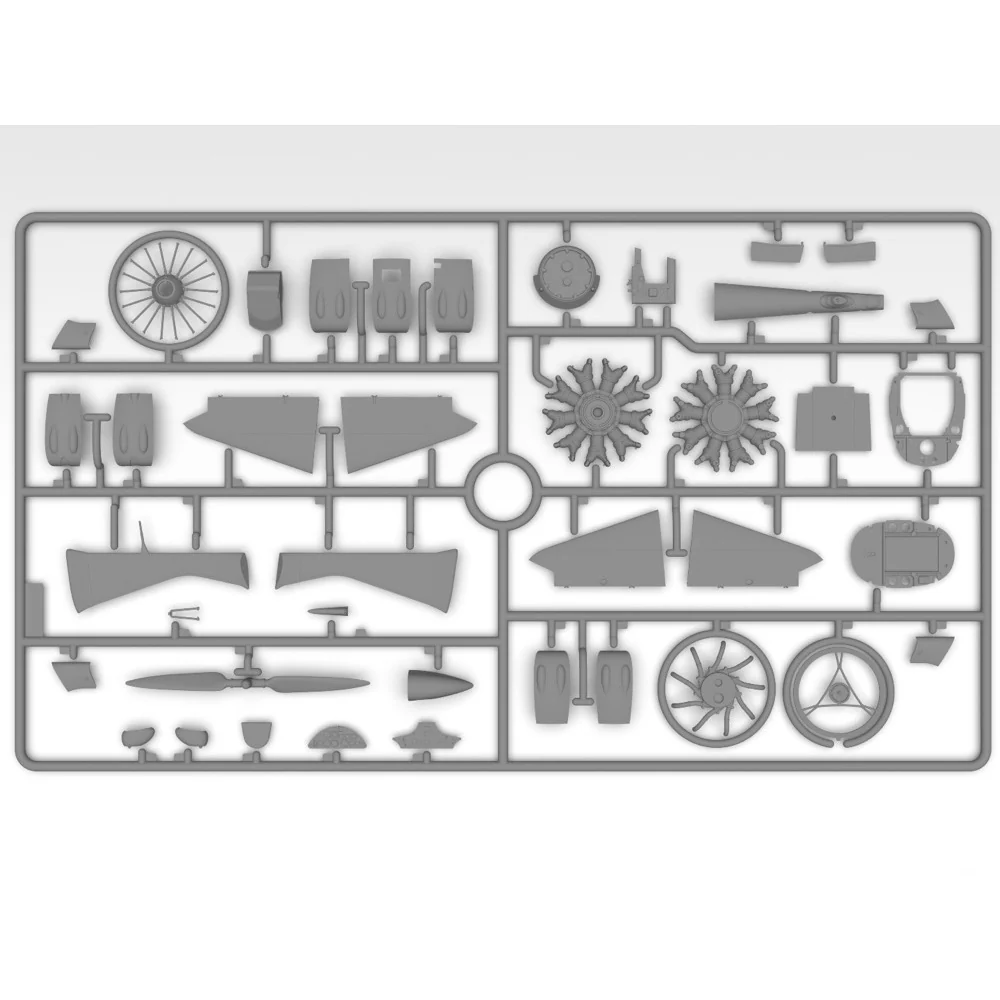
- Number of details: 201
Product Information
Product Information
Shipping & Returns
Shipping & Returns
Description
In 1933, at the initiative of the German Reich Ministry of Aviation, development began on a specialized dive bomber. In the spring of 1935, the prototype developed by Henschel Flugzeug-Werke A.G. made its first flight. This prototype was designated Hs-123 V1. The aircraft received positive evaluations, and in September 1936, serial production of the Hs 123A-1 modification commenced. The new attack aircraft was equipped with a BMW 132 engine, delivering 880 horsepower at takeoff.
As its built-in armament, it carried two synchronized machine guns mounted behind the instrument panel, firing through special ducts in the engine cowling. The lower wing, fitted with flaps, had four hardpoints for 50-kg bombs, and a single 250-kg bomb could be mounted under the fuselage. The Hs 123s were deployed with units assigned to direct infantry support, and they were also widely used in training units.
At the start of World War II, these aircraft were used during the invasion of Poland, and shortly after in France and the Balkans, where they demonstrated high survivability against anti-aircraft fire, even withstanding direct hits. Later, the Hs 123 saw action in Luftwaffe units during operations against the Soviet Union. Despite its outdated design, the aircraft remained in service with the German Air Force until as late as 1944.
Markings
- Hs 123A-1, II.(Sch)/LG 2, 2nd (assault) Group of the 2nd Training Squadron, France, Spring 1940
- Hs 123A-1, Flugzeugführerschule A/B 71, Pilot School A/B 71, Prossnitz, Summer 1941
- Hs 123A-1, Erg.St.(Sch.)/LG 2, Auxiliary (Assault) Squadron of the 2nd Training Squadron, Eastern Front, Winter 1942
- Hs 123A-1, II./SG 2, 2nd Group, 2nd Assault Squadron, Eastern Front, Spring 1944
Specifications
- Model size (length x width): 330 x 272 mm
- Box size: 410 x 260 x 55 mm
- Number of details: 201